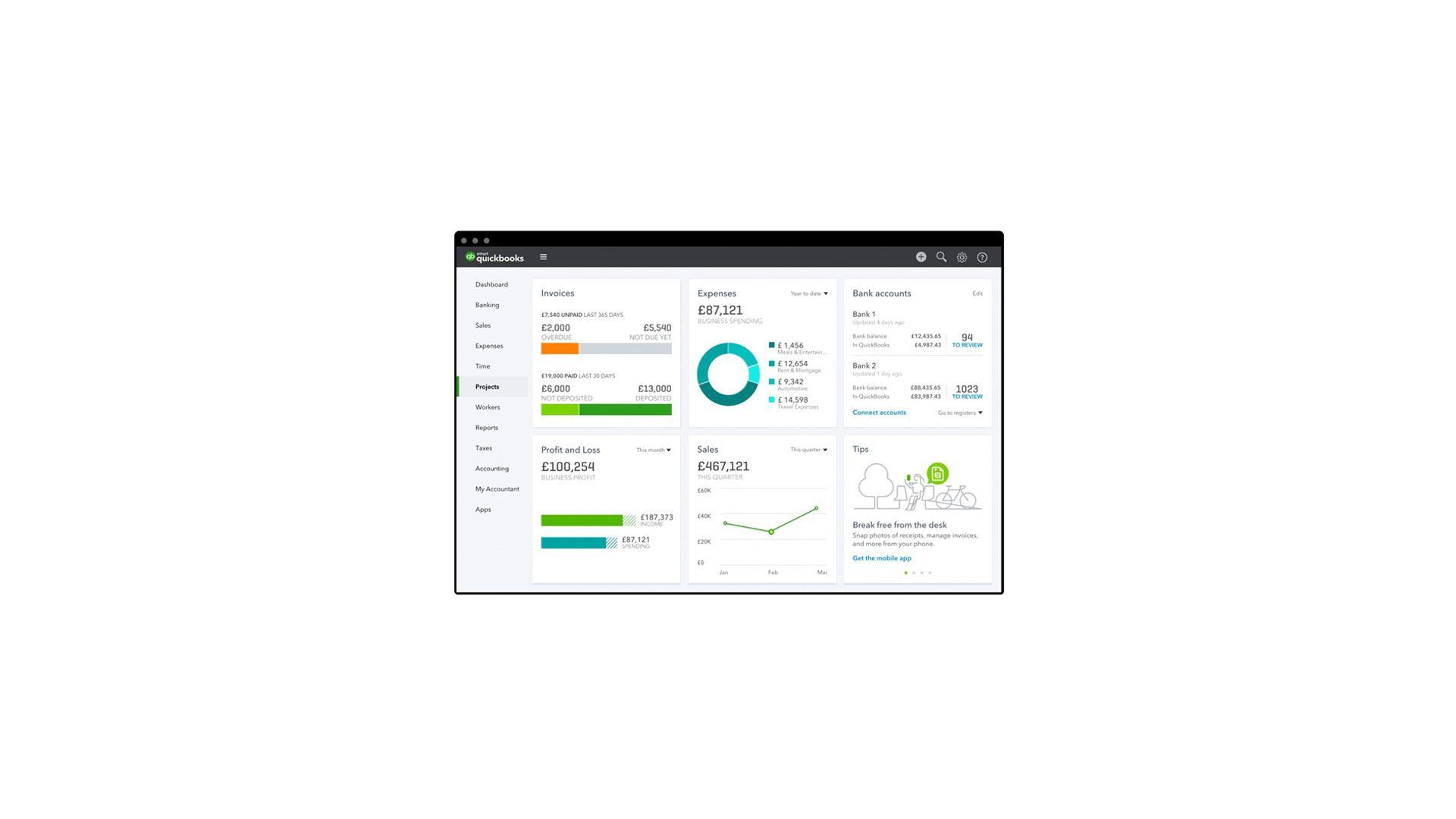
Quickbooks Accounting Software
This independent review examines QuickBooks, a widely used accounting software package for small businesses and individuals in the United Kingdom. QuickBooks was launched in 1992 by Intuit, a US-based financial software company. The system is cloud-based, popular, and easy to use.
Core Features
Automatic categorisation of transactions
Activity charts generated automatically
Ready-made balance sheets
Customisable invoices
|Recurring payment option
Automated payment reminders
Ability to create payment links
Receipt capture system
Vehicle mileage tracking
Expenses management system
VAT submission system linked to HMRC
VAT tracking and reporting system
Support for self-assessment use
Payslip generation system
Pension auto-enrolment
Comprehensive tax calculations
Automatic connection to banks and payment gateways
App store for integrations
Advantages
HMRC-linked for compliance
User-friendly interface
Widely supported by accountants and bookkeepers
Large ecosystem of integrations
Negatives
Can be expensive when add-ons are included
Basic inventory management
Reporting less advanced than enterprise-level systems
Cost (UK Pricing)
Sole Trader: £10/month + VAT
Simple Start: £16/month + VAT
Essentials: £30–£38/month + VAT
Plus: £47–£56/month + VAT
Advanced: £100–£123/month + VAT
Verdict
Alongside Xero and Sage, QuickBooks is among the most popular accounting systems in the UK. It is user-friendly and covers the essential functions for small businesses. Costs can rise significantly when add-ons are included. Customer support remains the primary area of concern for some users.
Code Inclusive Rating
7.9 out of 10
If you would like your technical products reviewed by the team at Code Inclusive, please email sales@codeinclusive.co.uk or utilise our online contact form.